
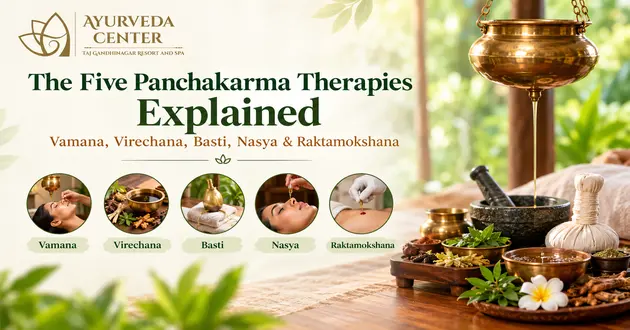
The Five Panchakarma Therapies Explained: Vamana, Virechana, Basti, Nasya & Raktamokshana
"Learn how Vamana, Virechana, Basti, Nasya and Raktamokshana work, who they suit, and what to expect. Guided by qualified Ayurvedic practitioners."
AI Overview & Quick Read
Panchakarma, meaning "five actions," is Ayurveda's most thorough system of detoxification and rejuvenation. Described in classical texts such as the Charaka Samhita and Sushruta Samhita, it aims to remove accumulated doshas (Vata, Pitta, Kapha) from the body and restore balance. This guide explains the five therapies: Vamana, Virechana, Basti, Nasya and Raktamokshana. It covers what each does, who it may suit, and what to expect.
Panchakarma, meaning "five actions," is Ayurveda's most thorough system of detoxification and rejuvenation. Described in classical texts such as the Charaka Samhita and Sushruta Samhita, it aims to remove accumulated doshas (Vata, Pitta, Kapha) from the body and restore balance. This guide explains the five therapies: Vamana, Virechana, Basti, Nasya and Raktamokshana. It covers what each does, who it may suit, and what to expect.
Before the Five Therapies: Preparation Matters
Panchakarma is not a single treatment. It follows three stages:
- Purvakarma (preparation): Snehana (internal and external oleation) and Swedana (herbal steam) loosen toxins (ama) and move them toward the digestive tract.
- Pradhanakarma (main therapy): One or more of the five therapies below.
- Paschatkarma (post-care): A graded diet (samsarjana krama), rest and lifestyle guidance to rebuild digestion.
Skipping preparation or aftercare is a common reason for poor results, which is why these therapies should be supervised by a qualified Ayurvedic physician.
1. Vamana: Therapeutic Emesis
What it is: A controlled, medically supervised induction of vomiting using herbal preparations, after proper oleation and steam.
Primary dosha: Kapha
Traditionally considered for: Kapha-dominant conditions such as chronic congestion, certain skin disorders, and sluggish digestion with excess mucus.
What to expect: Preparation over several days, followed by a morning session under observation. Light, easily digestible food follows.
Cautions: Vamana is generally not advised during pregnancy, in frail or elderly patients, or with heart disease, hypertension or severe weakness. A physician must assess suitability first.
2. Virechana: Therapeutic Purgation
What it is: A medicated purgation using herbs such as trivrit (Operculina turpethum) to cleanse the small intestine, liver and gall bladder region.
Primary dosha: Pitta
Traditionally considered for: Pitta-related conditions, including acidity, recurrent skin eruptions, and some liver and digestive complaints.
What to expect: Oleation and steam for several days, then the purgative on the therapy day. Rest and a simple diet follow.
Cautions: Not suitable during pregnancy, acute diarrhoea, or in people with rectal conditions or severe debility.
3. Basti: Medicated Enema
What it is: Herbal decoctions (Niruha/Asthapana) or medicated oils (Anuvasana) administered through the rectum. Classical texts often call Basti the foremost Panchakarma therapy, since the colon is considered the main seat of Vata.
Primary dosha: Vata
Traditionally considered for: Vata-related conditions such as joint stiffness, lower back discomfort, constipation, and certain neurological or musculoskeletal complaints.
What to expect: Basti is often given as a course (for example, in a scheduled series of days) tailored to the individual's constitution (prakriti) and condition.
Cautions: Not advised in severe diarrhoea, certain rectal conditions, or acute illness. A physician determines the type and number of Basti.
4. Nasya: Nasal Administration
What it is: Instillation of medicated oils, powders or herbal juices through the nose. Since the nose is described as the "doorway to the head," Nasya targets the head, neck and sinus region.
Primary dosha: Mainly Kapha and Vata (varies by formulation)
Traditionally considered for: Sinus congestion, headaches, stiffness in the neck and shoulders, and stress-related complaints.
What to expect: A gentle facial massage and steam, followed by a few drops in each nostril while lying down. It is among the milder Panchakarma therapies and takes under an hour.
Cautions: Avoid during acute fever, pregnancy, menstruation (as advised by a physician) or immediately after meals or bathing.
5. Raktamokshana: Bloodletting
What it is: The therapeutic removal of small amounts of impure blood, using methods described in the Sushruta Samhita such as leech therapy (Jalaukavacharana), or other classical techniques.
Primary dosha: Pitta and rakta (blood tissue)
Traditionally considered for: Localised skin conditions, certain inflammatory complaints and chronic non-healing issues.
What to expect: This is the most specialised of the five therapies. It must be performed only by a trained physician with sterile, single-use instruments or medical leeches.
Cautions: Not suitable for people with anaemia, bleeding disorders, those on blood thinners, pregnant women or the very weak.
Why Choose Supervised Panchakarma?
These are not do-it-yourself treatments. Safe Panchakarma depends on:
- A thorough consultation: pulse diagnosis, prakriti assessment and medical history review.
- Individualised protocols: no two programs should be identical.
- Qualified practitioners: look for registered Ayurvedic doctors (BAMS or MD Ayurveda).
- Hygiene and monitoring: especially for Basti and Raktamokshana.
If you are considering Panchakarma, you can explore treatment options and consult experienced practitioners at Ayurveda Center.
Enjoying this post? Add us to your Preferred Sources on Google.

About The Author
Dt. Riddhi Nanda
Experienced Nutrition & Lactation Consultant with over 10 years of expertise, having successfully guided 10,000+ patients. Certified in CCN, CWMST, ALP, PGDHHM, PGDMLS, and a proud member of the Nutrition Society of India.
Questions & Answers