
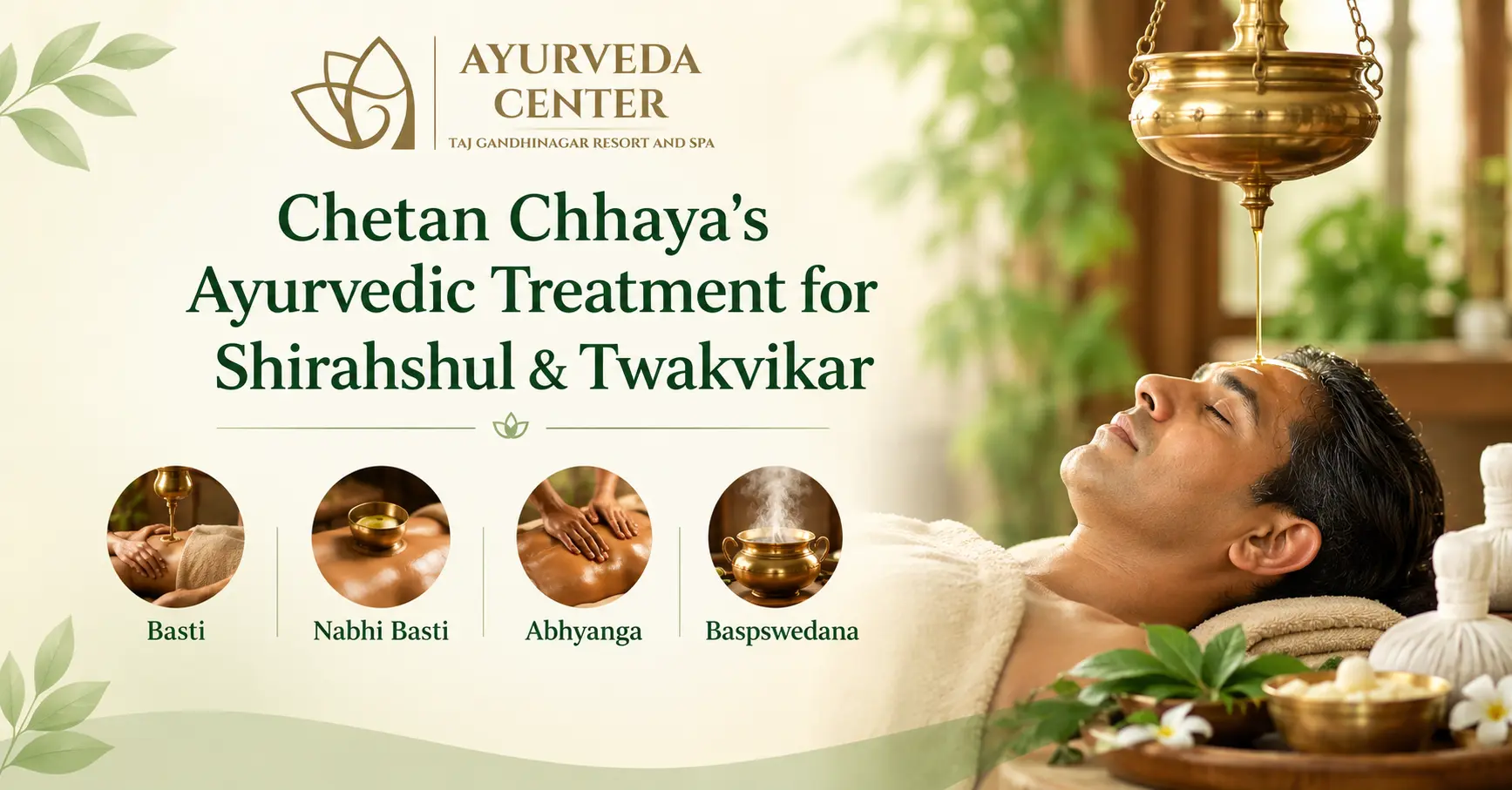
Chetan Chhaya’s Ayurvedic Treatment for Shirahshul and Twakvikar
"Read Chetan Chhaya’s Ayurvedic case study featuring Basti, Nabhi Basti, Abhyanga and Baspswedana at Ayurveda Center Taj Gandhinagar under Dr. Swapnil Modi."
AI Overview & Quick Read
Ayurveda offers a holistic approach to healthcare that considers an individual's symptoms, lifestyle, dietary habits, and overall wellbeing. For people experiencing headaches, skin-related complaints, abdominal discomfort, or other associated symptoms, an individualized treatment plan may include traditional Ayurvedic therapies alongside appropriate dietary and lifestyle recommendations.
Ayurveda offers a holistic approach to healthcare that considers an individual's symptoms, lifestyle, dietary habits, and overall wellbeing. For people experiencing headaches, skin-related complaints, abdominal discomfort, or other associated symptoms, an individualized treatment plan may include traditional Ayurvedic therapies alongside appropriate dietary and lifestyle recommendations.
This case study describes the treatment journey of Chetan Chhaya, a 49-year-old male patient, who was admitted to Ayurveda Center at Taj Gandhinagar Resort & Spa under the care of Dr. Swapnil Modi. The patient presented with multiple complaints over approximately 20 days and received a planned combination of Basti, Nabhi Basti, Abhyanga, and Baspswedana.
Patient Profile
Chetan Chhaya was admitted to the Taj Ayurveda Center on 19 September 2026 at 12:42 PM and discharged on 23 September 2026 at 3:40 PM.
The recorded diagnoses were:
- Shirahshul – headache
- Twakvikar – a skin-related disorder or complaint
The patient reported no known allergies to medicines or food.
Symptoms at the Time of Admission
According to the clinical case record, the patient had experienced the following complaints for approximately 20 days:
- Aadhman – abdominal bloating or distension
- Jirna Pratishyay – chronic or persistent rhinitis
- Aangamand – a feeling of heaviness or stiffness in the body
- Shirahshul – headache
- Paadshul – foot pain
- Paadtadshul – pain or discomfort in the soles of the feet
- Sarvang Kanddah – itching over the body
- Kwachit Ratkmondal – an intermittent symptom recorded in the clinical notes
These symptoms formed part of the patient's overall clinical presentation and were considered during the treatment-planning process.
No investigations were applicable during this admission, as documented in the case record.
Ayurvedic Assessment and Treatment Plan
Following clinical assessment, the patient was advised a structured treatment course comprising eight sessions each of Basti, Nabhi Basti, Abhyanga, and Baspswedana.
The patient was admitted for supervised treatment to allow the healthcare team to monitor his condition and response to the therapies. Inpatient observation was also recommended to help identify potential dehydration-related complications, including hypotension and giddiness, during the treatment process.
The treatment plan combined several traditional Ayurvedic procedures, with the selection and administration of therapies guided by the patient's clinical assessment.
During the hospital stay, five sessions of each prescribed therapy were completed. The remaining sessions were recommended on an outpatient basis after discharge.
Ayurvedic Therapies Administered
1. Basti
Basti is a traditional Ayurvedic therapeutic procedure involving the administration of a prescribed preparation through the rectal route under professional supervision.
In classical Ayurvedic practice, Basti is particularly associated with treatment approaches addressing Vata-related imbalances. The preparation, method, frequency, and duration are selected according to the individual's condition and the treating practitioner's assessment.
For Chetan, Basti was included as one component of the planned treatment course for his presenting complaints. The procedure was administered under supervision during his hospital stay.
2. Nabhi Basti
Nabhi Basti is a traditional Ayurvedic procedure in which a contained pool of selected warm oil or another prescribed substance is placed around the navel area for a specified duration.
The procedure is generally performed by creating a boundary around the navel and maintaining the selected substance at an appropriate temperature under professional supervision.
Within Ayurvedic practice, Nabhi Basti may be incorporated into individualized treatment protocols according to the patient's symptoms and clinical assessment.
For this patient, Nabhi Basti was included alongside Basti, Abhyanga, and Baspswedana as part of the overall therapeutic plan.
3. Abhyanga
Abhyanga is a traditional Ayurvedic oil massage performed using appropriately selected oils and specific techniques.
Depending on the patient's condition, the procedure may form part of a broader therapeutic approach intended to support relaxation and general wellbeing. The choice of oil, massage technique, and duration should be determined by a qualified practitioner.
Chetan received Abhyanga as part of his planned eight-session treatment course. Five sessions were completed during hospitalization.
4. Baspswedana
Baspswedana, commonly described as Ayurvedic steam therapy, is a traditional procedure involving controlled exposure to therapeutic steam.
It is often incorporated into Ayurvedic treatment protocols following appropriate preparatory procedures. The duration and intensity should be adjusted to the individual's condition and tolerance, with attention to hydration and overall safety.
In this case, Baspswedana was administered alongside the other prescribed therapies under supervision.
Hospital Course and Patient Response
During his admission from 19 to 23 January 2026, Chetan underwent five sessions each of Basti, Nabhi Basti, Abhyanga, and Baspswedana.
The inpatient setting allowed the treatment team to observe the patient's condition throughout the treatment period and monitor for potential dehydration-related symptoms, including hypotension and giddiness.
Following the therapies administered during hospitalization, the patient reported symptomatic improvement.
At the time of discharge, he was documented as being hemodynamically stable. He was advised to continue the remaining sessions on an outpatient department (OPD) basis to complete the planned course.
The documented improvement represents the patient's reported response during this admission. It should not be interpreted as proof that the therapies cure every underlying condition or produce the same results in other patients.
Dietary Recommendations After Discharge
Dietary guidance was included in the patient's discharge instructions to support a consistent routine during recovery.
He was advised to consume a light, warm, and easily digestible diet, including:
- Moong dal soup (Mudga Yusha)
- Rice gruel
- Light vegetable soups
The patient was instructed to avoid the following foods:
- Fermented foods
- Oily foods
- Excessively spicy foods
- Sour foods
Patients should follow dietary recommendations suited to their individual health conditions and discuss any specific nutritional requirements with their healthcare provider.
Lifestyle Recommendations and Rest
Along with dietary guidance, Chetan was advised to maintain a calm lifestyle and allow adequate time for rest.
His discharge instructions included avoiding:
- Excessive walking
- Excessive talking
- Sitting in uncomfortable postures
- Unnecessary physical exertion
Adequate rest and a comfortable daily routine were recommended as part of his post-treatment care plan. Follow-up appointments were also important for reviewing his progress and determining the next steps in treatment.
Outcome of the Case
Chetan Chhaya received five supervised sessions each of Basti, Nabhi Basti, Abhyanga, and Baspswedana during his four-day hospital stay. He reported symptomatic improvement following the therapies and was discharged in a hemodynamically stable condition.
The remaining sessions from the prescribed course were recommended on an OPD basis. Dietary modifications, adequate rest, and avoidance of excessive physical exertion were also included in the discharge instructions.
This case illustrates an individualized Ayurvedic care approach involving multiple traditional therapies, clinical observation, and supportive lifestyle recommendations. Treatment selection should always be based on a qualified professional's assessment, with appropriate monitoring and follow-up.
Conclusion
Chetan Chhaya's case documents an individualized Ayurvedic treatment plan for complaints recorded as Shirahshul and Twakvikar. Under the care of Dr. Swapnil Modi at Ayurveda Center at Taj Gandhinagar Resort & Spa, the patient received Basti, Nabhi Basti, Abhyanga, and Baspswedana during his admission in September 2026.
After five sessions of each therapy, he reported symptomatic improvement and was discharged in a stable condition, with instructions to continue the remaining sessions on an outpatient basis.
At Ayurveda Center, individualized care includes clinical assessment, appropriate therapeutic planning, dietary guidance, and follow-up recommendations. Treatment outcomes vary, and persistent headaches, widespread itching, abdominal symptoms, or other ongoing complaints should be assessed by a qualified healthcare professional. Ayurvedic therapies should be used with appropriate medical guidance and should not replace necessary diagnostic evaluation or treatment.
Enjoying this post? Add us to your Preferred Sources on Google.
Tags

About The Author
Dt. Riddhi Nanda
Experienced Nutrition & Lactation Consultant with over 10 years of expertise, having successfully guided 10,000+ patients. Certified in CCN, CWMST, ALP, PGDHHM, PGDMLS, and a proud member of the Nutrition Society of India.
Questions & Answers