
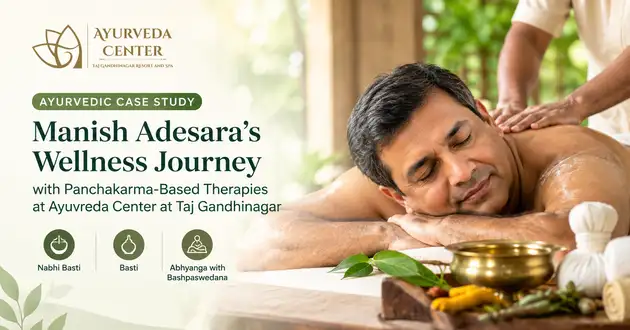
Manish Adesara’s Wellness Journey with Panchakarma-Based Therapies at Ayurveda Center at Taj Gandhinagar
"Read Manish Adesara’s Ayurvedic case study at Ayurveda Center at Taj Gandhinagar, featuring Nabhi Basti, Basti and Abhyanga with Bashpaswedana."
AI Overview & Quick Read
Ayurveda takes a personalized approach to wellness by considering an individual’s symptoms, lifestyle, dietary habits, and overall condition before recommending therapies. This case study describes the treatment journey of Mr. Manish Adesara, a 53-year-old male, who visited Ayurveda Center at Taj Gandhinagar with a three-month history of multiple symptoms, including headache, abdominal discomfort, itching, burning sensations, and generalized fatigue.
Ayurveda takes a personalized approach to wellness by considering an individual’s symptoms, lifestyle, dietary habits, and overall condition before recommending therapies. This case study describes the treatment journey of Mr. Manish Adesara, a 53-year-old male, who visited Ayurveda Center at Taj Gandhinagar with a three-month history of multiple symptoms, including headache, abdominal discomfort, itching, burning sensations, and generalized fatigue.
Under the care of Dr. Swapnil Modi, the patient underwent a planned course of Ayurvedic therapies, including Nabhi Basti, Basti, and Abhyanga with Bashpaswedana. Following the treatment sessions, the patient reported symptomatic improvement and was discharged in a hemodynamically stable condition.
The Patient’s Concerns
Before admission, Mr. Adesara had been experiencing symptoms for approximately three months. His reported complaints included:
- Aadhman (abdominal distension/bloating)
- Udardah
- Aangamand (generalized fatigue or heaviness)
- Shirahshul (headache)
- Sarvang-related discomfort
- Kandu dah (itching and burning sensation)
Based on the clinical assessment, the patient was diagnosed with Shirahshul and Twakvikar and was advised a supervised course of Ayurvedic therapies.
Personalized Ayurvedic Treatment Plan
The treatment plan included three sessions each of:
1. Nabhi Basti
Nabhi Basti is an Ayurvedic therapy involving the application of a specially prepared herbal oil or formulation around the navel region. The therapy is selected according to the individual's Ayurvedic assessment and treatment plan.
For Mr. Adesara, three sessions of Nabhi Basti were performed during his hospital stay.
2. Basti
Basti is one of the classical therapeutic procedures described in Ayurveda. Depending on the individual's condition and Ayurvedic assessment, different forms of Basti may be selected by the treating physician.
As part of his prescribed treatment, Mr. Adesara received three sessions of Basti under supervision.
3. Abhyanga with Bashpaswedana
Abhyanga is a traditional Ayurvedic oil massage technique, while Bashpaswedana refers to a form of herbal steam therapy traditionally used following certain Ayurvedic procedures.
The combination was included in Mr. Adesara's treatment plan, with three sessions completed during hospitalization.
Why Was Hospitalization Recommended?
The patient was admitted to allow the prescribed therapies to be performed under appropriate supervision.
According to the case record, admission was recommended to monitor the patient and reduce the risk of complications related to dehydration during therapy, including symptoms such as hypotension or giddiness.
This supervised approach allowed the treating team to monitor the patient's condition throughout the treatment period.
Three-Day Treatment Journey
Mr. Adesara was admitted on 16 August 2026 and remained under supervised care until his discharge on 18 August 2026.
During this period, the planned three sessions each of Nabhi Basti, Basti, and Abhyanga with Bashpaswedana were completed.
Following the treatment, the patient reported symptomatic improvement. Based on his condition, he was considered stable for discharge and was advised to continue the remaining recommended sessions on an outpatient basis.
Dietary Advice After Treatment
Ayurvedic care can include dietary and lifestyle recommendations alongside therapeutic procedures. Following discharge, Mr. Adesara was advised to follow a light, warm, and easily digestible diet.
Recommended foods included:
- Moong dal soup (Mudga Yusha)
- Rice gruel
- Light vegetable soups
- Other simple and easily digestible warm preparations
He was advised to avoid:
- Fermented foods
- Oily foods
- Excessively spicy foods
- Sour foods
Following dietary guidance can help patients maintain a structured routine during the recovery period.
Lifestyle Recommendations
The discharge instructions also emphasized maintaining a calm and restful lifestyle.
Mr. Adesara was advised to avoid:
- Excessive walking
- Excessive talking
- Sitting in uncomfortable postures
- Unnecessary physical exertion
Adequate rest and maintaining a comfortable daily routine were recommended as part of his post-treatment care.
Outcome of the Treatment
At the time of discharge, the patient was hemodynamically stable.
The case record documents that Mr. Adesara reported symptomatic improvement after the treatment sessions. He was discharged with instructions to continue the remaining recommended sessions on an OPD basis.
The outcome demonstrates the importance of an individualized treatment plan, supervised Ayurvedic procedures, and appropriate dietary and lifestyle guidance as part of this particular patient's care.
A Personalized Approach to Ayurvedic Wellness
Every patient's health concerns and treatment requirements are different. Ayurveda traditionally emphasizes individualized assessment rather than applying the same treatment approach to everyone.
In Mr. Adesara's case, the treatment plan incorporated Nabhi Basti, Basti, and Abhyanga with Bashpaswedana, along with dietary and lifestyle recommendations. The therapies were carried out under the supervision of a qualified physician, with hospitalization allowing appropriate monitoring during the treatment period.
For anyone considering Ayurvedic therapy, consultation with a qualified Ayurvedic practitioner is important to understand whether a particular therapy is appropriate for their individual circumstances.
Conclusion
Mr. Manish Adesara's case represents an individual Ayurvedic treatment journey at Ayurveda Center at Taj Gandhinagar. After presenting with several symptoms over a period of approximately three months, he underwent a supervised treatment program consisting of Nabhi Basti, Basti, and Abhyanga with Bashpaswedana.
After completing the planned sessions during his hospitalization, he reported symptomatic improvement and was discharged in a stable condition with further dietary, lifestyle, and outpatient treatment recommendations.
This case study highlights the role of personalized Ayurvedic care, supervised therapies, and post-treatment guidance in supporting an individual's wellness journey.
Enjoying this post? Add us to your Preferred Sources on Google.
Tags

About The Author
Dt. Riddhi Nanda
Experienced Nutrition & Lactation Consultant with over 10 years of expertise, having successfully guided 10,000+ patients. Certified in CCN, CWMST, ALP, PGDHHM, PGDMLS, and a proud member of the Nutrition Society of India.
Questions & Answers