
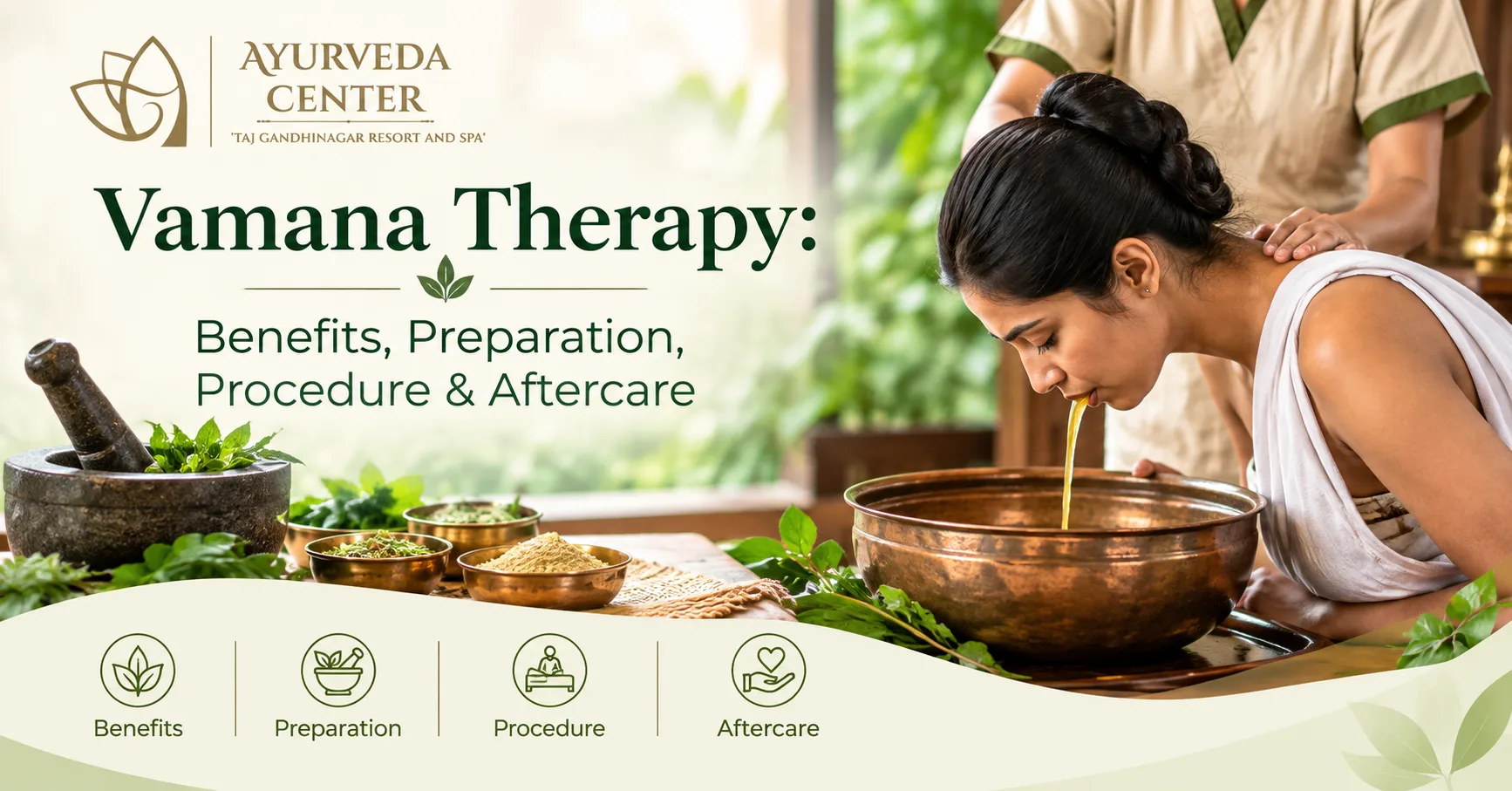
Vamana Therapy: Benefits, Preparation, Procedure & Aftercare
"Learn about Vamana Therapy, its benefits, preparation, procedure and aftercare, including Vamana Chikitsa and Panchakarma guidance in Ayurveda Center at Taj Gandhinagar."
AI Overview & Quick Read
Vamana Therapy is one of the five classical therapies described in Panchakarma, the Ayurvedic system of therapeutic cleansing. It is traditionally used under the supervision of a qualified Ayurvedic physician to support the management of conditions associated with an aggravated Kapha dosha. Also known as Ayurvedic Emesis Therapy, Vamana involves a carefully planned therapeutic process that encourages controlled elimination through vomiting after appropriate preparation.
Vamana Therapy is one of the five classical therapies described in Panchakarma, the Ayurvedic system of therapeutic cleansing. It is traditionally used under the supervision of a qualified Ayurvedic physician to support the management of conditions associated with an aggravated Kapha dosha.
Also known as Ayurvedic Emesis Therapy, Vamana involves a carefully planned therapeutic process that encourages controlled elimination through vomiting after appropriate preparation. Because it is a specialized procedure, Vamana Chikitsa should be performed only after an Ayurvedic physician has assessed an individual's health, constitution, symptoms, and suitability for the treatment.
For people considering Vamana Therapy in Gandhinagar, understanding its purpose, preparation, procedure, benefits, and aftercare is essential before making a treatment decision.
What Is Vamana Therapy?
Vamana Therapy, also called Vamana Chikitsa, is a classical Panchakarma procedure in which therapeutic vomiting is induced under professional supervision. In Ayurveda, the treatment is primarily associated with the elimination of excess Kapha and accumulated doshas from the body.
Vamana is not the same as self-induced vomiting or a general detox treatment. It is a structured Ayurvedic therapy involving preparation, the main procedure, and post-treatment care.
The treatment plan may vary depending on an individual's Prakriti (constitution), Vikriti (current imbalance), age, strength, digestive capacity, medical history, and health condition.
Vamana Therapy in Panchakarma
Panchakarma traditionally consists of five therapeutic procedures:
- Vamana – therapeutic emesis
- Virechana – therapeutic purgation
- Basti – medicated enema therapy
- Nasya – administration of medicines through the nasal route
- Raktamokshana – therapeutic bloodletting
Among these, Vamana Therapy in Panchakarma is traditionally associated with Kapha-related imbalances.
A qualified Ayurvedic practitioner first determines whether Vamana is appropriate. Depending on the individual's condition, other Panchakarma therapies or supportive Ayurvedic treatments may be recommended instead.
Who May Benefit From Vamana Treatment?
In classical Ayurveda, Vamana Treatment may be considered for selected conditions associated with aggravated Kapha. Ayurvedic practitioners may evaluate Vamana as part of a treatment plan for certain respiratory, allergic, skin, or digestive complaints.
However, the suitability of Vamana depends on the individual rather than the diagnosis alone.
An Ayurvedic physician should evaluate:
- Age and overall strength
- Digestive capacity
- Prakriti and current dosha imbalance
- Existing medical conditions
- Medications being taken
- Pregnancy status, where applicable
- Previous treatments and health history
- Ability to safely undergo the procedure
Vamana should therefore never be undertaken solely because it is promoted as a "detox" or wellness therapy.
Potential Benefits of Vamana Ayurvedic Therapy
The traditional Ayurvedic rationale for Vamana Ayurvedic Therapy is to remove excess Kapha and support restoration of doshic balance.
Depending on the individual's condition and treatment plan, practitioners may use Vamana with the goal of supporting:
- Kapha balance
- Respiratory health
- Digestive function
- Metabolic balance
- Skin health in selected Kapha-related conditions
- Overall Ayurvedic wellness following appropriate cleansing
It is important to distinguish traditional Ayurvedic therapeutic goals from modern clinical evidence. Research on Panchakarma and individual procedures remains limited compared with many conventional medical treatments. Therefore, Vamana should not be presented as a guaranteed cure or replacement for necessary medical care.
How to Prepare for Vamana Chikitsa
Preparation is an important part of Vamana Chikitsa. The exact preparation schedule should be determined by an Ayurvedic physician rather than followed from a generic online guide.
1. Initial Ayurvedic Assessment
The practitioner reviews the individual's health history, symptoms, constitution, digestive strength, lifestyle, and other relevant factors.
This assessment helps determine whether Vamana is appropriate and how the therapy should be conducted.
2. Deepana and Pachana
Depending on the individual's condition, Ayurvedic preparation may include Deepana and Pachana, traditionally intended to support digestive function and prepare the body for subsequent therapy.
3. Snehapana
In selected Panchakarma protocols, internal oleation, known as Snehapana, may be prescribed. Medicated or suitable oils/ghee may be administered according to the practitioner's assessment.
4. Abhyanga and Swedana
External oleation through Abhyanga and therapeutic sweating, or Swedana, may form part of the preparatory process.
These therapies are traditionally used to prepare the body before the main Panchakarma procedure.
Vamana Therapy Procedure
The exact Vamana procedure varies according to the individual's Ayurvedic assessment and the protocol followed by the treating physician.
Generally, the process includes:
- Pre-treatment preparation: The patient follows the physician's prescribed preparation protocol.
- Assessment on the treatment day: The practitioner evaluates whether the patient is fit to proceed.
- Administration of prescribed preparations: Specific Ayurvedic preparations may be given according to the treatment protocol.
- Controlled therapeutic emesis: Vomiting is induced under continuous supervision.
- Monitoring: The practitioner observes the process and determines when the procedure should be stopped.
- Post-procedure care: The patient is guided through diet, rest, hydration, and recovery measures.
The procedure should be performed in a suitable clinical environment with trained Ayurvedic professionals and appropriate safety measures.
Vamana Therapy Aftercare
After Vamana, appropriate recovery is an essential part of the treatment.
Ayurvedic practitioners may recommend a gradual dietary regimen known as Samsarjana Krama. This involves progressively returning to a normal diet as digestive capacity recovers.
Depending on the physician's recommendations, aftercare may include:
- Eating light and easily digestible foods
- Following the prescribed diet schedule
- Getting adequate rest
- Avoiding strenuous physical activity temporarily
- Avoiding alcohol and other unsuitable foods or activities
- Taking prescribed Ayurvedic medicines as directed
- Attending follow-up consultations
Patients should follow the individualized instructions provided by their treating physician rather than adopting a generic post-Vamana diet.
Is Vamana Therapy Safe?
Vamana is a specialized therapeutic procedure and should not be performed without professional supervision.
It may not be appropriate for everyone. Individuals with certain medical conditions, significant weakness, pregnancy, or other contraindications may require alternative approaches.
Possible adverse effects can include weakness, dehydration, nausea, dizziness, electrolyte disturbances, or other complications, particularly if the procedure is performed incorrectly or without appropriate patient selection.
For this reason, consultation with a qualified Ayurvedic physician is essential before undergoing Vamana Treatment.
Vamana Therapy in Gandhinagar
If you are considering Vamana Therapy in Gandhinagar, choose an Ayurvedic facility where treatment begins with an individual assessment rather than a one-size-fits-all protocol.
The Ayurveda Center at Taj Gandhinagar provides an Ayurvedic setting where therapies can be planned according to the individual's needs and the guidance of qualified practitioners.
Before beginning Vamana, discuss your health history, current medications, previous treatments, and any existing medical conditions with your Ayurvedic physician.
Conclusion
Vamana Therapy is a specialized component of traditional Panchakarma that uses supervised therapeutic emesis as part of an Ayurvedic approach to managing selected Kapha-related imbalances. The therapy involves much more than the main procedure: proper patient assessment, preparation, professional supervision, and aftercare are all important.
If you are considering Vamana Ayurvedic Therapy or Vamana Treatment, avoid self-treatment and consult a qualified Ayurvedic physician first. A personalized assessment can help determine whether Vamana Chikitsa is appropriate for you and whether another Ayurvedic therapy may be more suitable.
For those exploring Vamana Therapy in Gandhinagar, the Ayurveda Center at Taj Gandhinagar can be consulted for an individualized Ayurvedic assessment and guidance.
Enjoying this post? Add us to your Preferred Sources on Google.
Tags

About The Author
Dt. Riddhi Nanda
Experienced Nutrition & Lactation Consultant with over 10 years of expertise, having successfully guided 10,000+ patients. Certified in CCN, CWMST, ALP, PGDHHM, PGDMLS, and a proud member of the Nutrition Society of India.
Questions & Answers