
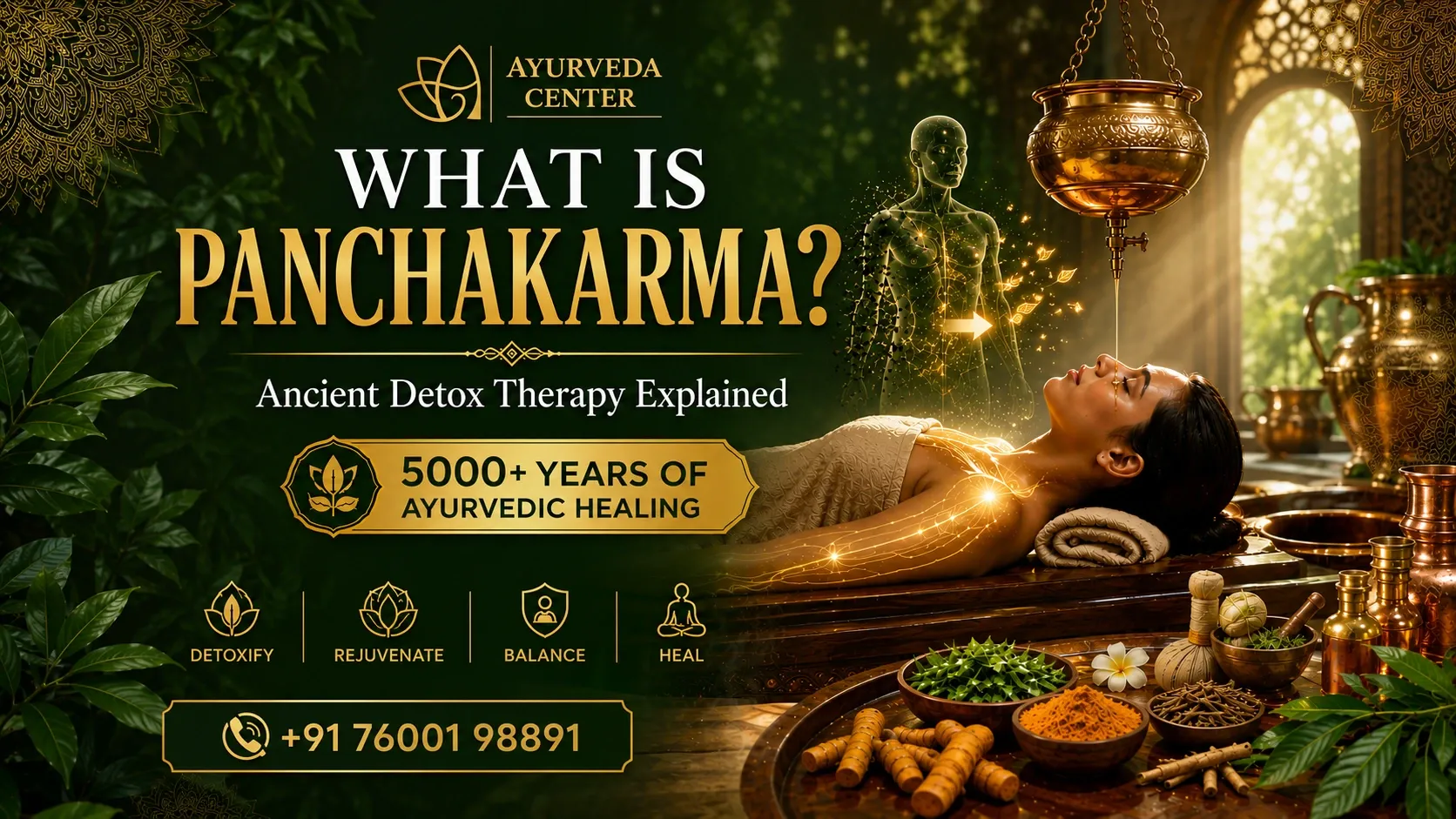
What is Panchakarma? Ancient Detox Therapy Explained
"Panchakarma is an Ayurvedic therapy using oils and massage to cleanse your body. Learn how it works, benefits and what to expect at Ayurveda Center at Taj."
If you've been down the wellness rabbit hole, you've probably heard about Panchakarma. But here's the thing. Most people get it wrong. They think it's just another trendy detox protocol, something you knock out in a weekend and move on. That's not what Panchakarma is at all.
I've spent years studying Ayurveda, and I can tell you that Panchakarma represents something fundamentally different from the cleanses you see everywhere. It's a five step therapeutic system that doesn't just pull toxins from your body. It resets your entire system. It's been working for thousands of years, and there's a reason it's still considered the gold standard in Ayurvedic medicine.
Understanding Panchakarma in Ayurveda
The word Panchakarma literally means "five actions." That's it. Simple. But what these five actions do is anything but simple.
In Ayurveda, we don't just think about toxins as things floating around in your bloodstream. We're talking about something called ama, this sticky, undigested gunk that builds up in your tissues over time. Maybe it's from eating food your body couldn't properly process. Maybe it's from years of stress. Maybe it's environmental pollution. It doesn't really matter how it got there. What matters is that once ama settles in, it starts blocking your energy channels and mucking up everything.
Panchakarma therapy works by systematically flushing this stuff out. But here's what separates it from typical detox programs: it doesn't just push harder. It's way more thoughtful than that. Your practitioner assesses your unique constitution and figures out exactly what your body needs to heal. Someone else might need a completely different approach. That's why the Ayurveda Center at Taj Gandhinagar takes time to really understand each person before starting treatment, because one size fits all simply doesn't work.
Why Detoxification Matters According to Ayurveda
We're drowning in toxins these days, whether we want to admit it or not. Processed food, air pollution, stress that never lets up, digital radiation. It never stops. Your digestive system gets weaker and weaker trying to handle all of it. When your digestive fire can't do its job properly, everything gets backed up.
That's when disease starts creeping in. Not as some dramatic event, but quietly, over months and years. You feel a little more tired than usual. Your skin breaks out randomly. Your joints ache. You can't sleep well. These aren't random. They're signs that ama has built up.
Most modern medicine treats these symptoms individually. Ayurveda looks at what caused them in the first place. Panchakarma therapy addresses that root cause by actually cleaning your system out. Once the sludge is gone, your digestion comes back online, your energy returns, your mind clears. It's not magic. It's just physiology working the way it's supposed to.
The Five Core Therapies of Panchakarma
Each of these five techniques does something different. Your practitioner picks which ones you need based on what's actually happening in your body.
Vamana
Vamana is therapeutic vomiting, and yes, it sounds intense. But it's not like being sick. It's controlled and intentional. This therapy targets excess Kapha dosha, all that heaviness and congestion in your upper body and lungs.
If you've had chronic respiratory issues, constant coughing, or that feeling of heaviness in your chest that won't go away, Vamana addresses it directly. You get preparatory treatments that loosen everything up, then herbal formulas help your body do the work. Most people feel incredibly lighter and clearer afterward. It's like someone opened a window in your lungs.
Virechana
Virechana is purgation therapy, basically supporting your body to eliminate excess Pitta dosha and all that heat and inflammation. It's particularly useful for people with skin problems, digestive inflammation, or who run hot temperamentally.
The herbal preparations are formulated to be gentle but effective. You're not running to the bathroom all day in distress. It's more like your body efficiently moving things through. Within days, most people notice their skin clears, they feel less irritable, and their digestion actually improves.
Basti
Basti involves introducing medicated oils or herbal decoctions through the colon. I know that sounds uncomfortable, but it's actually deeply nourishing. This is the one that affects your nervous system the most.
Because it requires proper technique and customized formulations, you really want to be at a proper facility like the Ayurveda Center at Taj Gandhinagar. There are different types depending on what you need. Some versions lubricate and rebuild tissues, others eliminate toxins, some target specific problems like arthritis or insomnia. Many Ayurvedic practitioners consider Basti the most powerful Panchakarma therapy because it touches everything.
Nasya
Nasya sends medicated oils up through your nasal passages to reach your head and brain. In Ayurveda, the nose is the gateway to the mind, and it makes sense when you think about it.
If you've dealt with brain fog, memory issues, sinus problems, or can't sleep, Nasya often makes a noticeable difference. People report clearer thinking, better intuition, and deeper sleep pretty quickly after treatments.
Raktamokshana
Raktamokshana purifies your blood directly. Modern versions use graduated cups applied to specific areas. It's safe and effective when done properly. This one helps people with stubborn skin conditions, eczema, acne, or localized inflammation that just won't budge.
Key Benefits of Panchakarma Therapy
Here's what actually happens when you go through proper Panchakarma treatment: your body starts working again.
Your digestion gets stronger. Your energy comes back. You sleep better. Chronic pain that's been nagging you for years often just disappears. Your skin glows. Your immune system kicks into gear. These aren't separate benefits. They all happen because your system is finally clean enough to function properly.
But the mental and emotional stuff might actually be bigger. Stress and trauma literally get stored in your tissues. When you clean those tissues out, something shifts emotionally too. People come out calmer, clearer, more capable of handling life. Many say they feel like themselves again, like they remembered who they actually are underneath all the accumulated stuff.
Who Should Consider Panchakarma?
Honestly? Anyone who's serious about their health should consider it at some point. If you're dealing with chronic health problems, digestive issues that won't resolve, mental health challenges, or you just feel stuck and tired, Panchakarma addresses all of that.
If you have serious health conditions, make sure you're working with an experienced facility like Ayurveda Center at Taj Gandhinagar where practitioners understand your full health picture and can customize everything appropriately.
What Happens During a Panchakarma Program?
A full program usually runs three to four weeks. You don't just start the main therapies cold. Your body needs preparation.
The first week or so focuses on opening things up. Daily oil massage, herbal treatments, dietary shifts. All designed to loosen ama and get it moving. Then comes the actual main therapies, which happen alongside a specific diet designed to support detoxification without overloading your digestion.
Finally, you rebuild. Your practitioner walks you through a diet that gradually returns to normal, rejuvenation therapies that restore strength, and lifestyle habits that keep the benefits going long after treatment ends.
Why Ayurveda Center at Taj Gandhinagar is a Trusted Choice
Where you get Panchakarma therapy matters tremendously. A genuinely skilled Ayurvedic center understands that every person walks in with different needs. The Ayurveda Center at Taj Gandhinagar has been doing this work seriously for decades. They're not treating Panchakarma as a commodity. They customize everything, they have properly trained practitioners, and they follow traditional protocols that actually work.
Enjoying this post? Add us to your Preferred Sources on Google.
Tags

About The Author
Dt. Riddhi Nanda
Experienced Nutrition & Lactation Consultant with over 10 years of expertise, having successfully guided 10,000+ patients. Certified in CCN, CWMST, ALP, PGDHHM, PGDMLS, and a proud member of the Nutrition Society of India.
Questions & Answers