
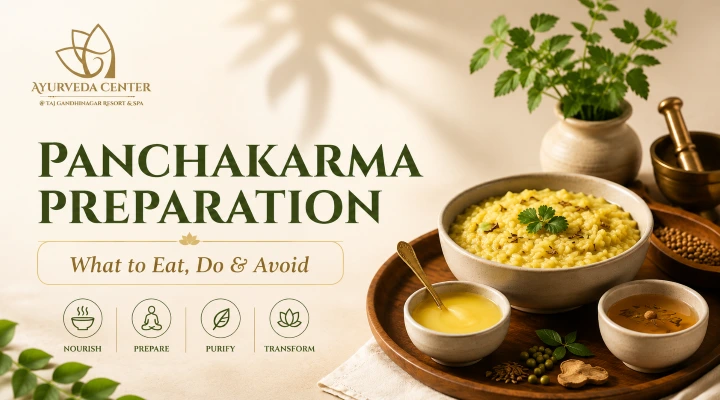
Panchakarma Preparation: What to Eat, Do & Avoid
"Get ready for panchakarma therapy the right way. Learn what to eat, what to avoid and how to prepare your body properly at Ayurveda Center."
I've worked with hundreds of people preparing for panchakarma treatment, and honestly, preparation makes or breaks the entire experience. You can show up to the best facility like the Ayurveda Center at Taj Gandhinagar, but if you've spent the week before eating pizza and coffee, you're starting behind. The body needs actual readiness, not just good intentions.
Recent 2025 clinical research published by major research institutions shows that people who prepare properly for panchakarma treatment see up to 50% greater reduction in accumulated environmental toxins compared to those who don't. That's significant. The body responds better when it's been readied. This isn't just philosophy. It's measurable physiology.
Understanding Why Preparation Matters for Panchakarma Therapy
Before we talk about what to eat, let's understand why preparation is non-negotiable. Your digestive fire needs gradual adjustment. If you go from your normal diet straight into panchakarma therapy protocols, your body experiences shock. Sudden dietary changes trigger withdrawal symptoms, digestive upset, and emotional instability right when you're supposed to be healing.
Proper preparation over one to two weeks tells your system what's coming. Your digestive fire begins calming down. Your cravings shift. Your body naturally craves lighter foods. This sets the foundation for everything that happens during ayurveda panchakarma treatment itself. When practitioners at Ayurveda Center at Taj Gandhinagar work with clients, they emphasize this foundational phase because they've seen firsthand how it determines outcomes.
The Preparation Phase Diet: What to Eat
Start adjusting your eating patterns at least seven to ten days before your program begins. This is called Purvakarma in Ayurvedic medicine, and it's where the real work starts.
Focus on warm, freshly cooked foods that are easy to digest. This means kichadi, the combination of rice and mung dal cooked with mild spices like turmeric and ginger. This is your foundation meal. Eat it twice daily if possible. Add steamed vegetables, soups made from moong dal, and stewed fruits like apples and pears. These provide natural fiber without overwhelming your digestive system.
Include generous amounts of ghee in your cooking. Ghee lubricates your digestive tract and helps loosen toxins from deep tissues. This process is called Snehapana, and it's essential preparation for what happens during actual panchakarma treatment. Most people need to increase ghee gradually, starting with a tablespoon and working up to whatever your practitioner recommends.
Herbal teas are your friends during this phase. Drink warm cumin, coriander, and fennel tea throughout the day. These simple spices have been used for thousands of years because they genuinely support digestion without irritating your system.
What to Eliminate: The Critical Avoidances
This is where people struggle most, but it's also where the transformation begins. You need to eliminate several categories of food completely, not just reduce them.
Stop all caffeine at least five days before your program starts. Coffee, black tea, green tea, chocolate, energy drinks. All of it. I know caffeine withdrawal is real and miserable. That's exactly why you need to start early. If you quit cold turkey the day before arriving at a panchakarma retreat, you'll spend your first three days of treatment with pounding headaches instead of healing. Start cutting back now.
Cut out all processed and fried foods. That includes fast food, packaged snacks, most restaurant meals, anything with refined sugar, and processed meats. These create additional toxic burdens that your liver and digestive system are already overwhelmed by. The panchakarma treatment is supposed to clean these toxins out. Don't add new ones while preparing.
Avoid heavy animal proteins, especially meat and cheese. Your digestive fire weakens with heavy proteins, and you need it strong for the preparation phase. If you eat animal products, make small amounts of simple fish or ghee only. Most people are fine going vegetarian during this phase.
Eliminate alcohol and smoking completely. These stress your nervous system and add toxins at the exact moment you're trying to eliminate them. People sometimes think they'll have one last drink before starting, but that defeats the entire purpose of preparation.
Skip raw and cold foods. Your digestive system needs warmth right now. Raw salads, cold smoothies, and foods straight from the refrigerator require your digestive fire to work harder. Everything should be warm and cooked.
Understanding Basti Panchakarma Treatment During Your Program
While you're preparing, understand that your specific panchakarma treatment will likely include basti panchakarma treatment, which is the most powerful of the five therapies. Basti involves medicated oils or herbal decoctions introduced through the colon, directly nourishing your nervous system.
Recent 2025 research shows that proper preparation before basti panchakarma treatment leads to significantly better outcomes. Your system needs readiness for this deeper work. The dietary preparation you're doing now is setting that up. Facilities like Ayurveda Center at Taj Gandhinagar emphasize this connection between preparation quality and treatment results because the clinical outcomes validate it consistently.
Practical Preparation Beyond Diet
Food is crucial, but it's not everything. Your mind needs preparation too.
Reduce stress intentionally. If possible, take vacation time before arriving at your panchakarma retreat. Your nervous system should begin settling down before treatment even starts. Meditation, gentle yoga, quiet time in nature, whatever calms you personally. Avoid intense exercise during this phase.
Handle your logistics early. Pay bills, arrange work coverage, alert people who might contact you. When your mind isn't worrying about chaos happening at home, you can actually relax into healing.
Gradually shift your schedule toward earlier sleep and earlier waking. Your body's natural rhythms matter. If you normally sleep until nine and stay up until midnight, don't suddenly shift that on treatment day. Move it gradually during preparation week.
Some people find that consulting with their Ayurvedic practitioner about their specific constitution helps. Different dosha types benefit from slightly different preparation. If you're preparing for panchakarma treatment price considerations and center selection, this assessment helps too.
Finding Quality Panchakarma Therapy Near Me
If you're searching "panchakarma therapy near me," remember that location matters less than quality. Centers offering legitimate panchakarma treatment have qualified practitioners who customize everything based on individual assessment.
Recent 2026 data from major retreat centers shows that people who prepare properly during those one to two weeks see dramatically better results than those who arrive unprepared. Many facilities now emphasize this heavily because the results speak for themselves. When evaluating options for your panchakarma treatment, look for centers that require and support proper preparation phases. Ayurveda Center at Taj Gandhinagar represents the kind of facility that takes preparation seriously, providing detailed guidance weeks before your arrival.
Final Thoughts
Real transformation from panchakarma treatment starts before you ever arrive at the retreat center. The preparation phase isn't optional or nice to have. It's fundamental. When you commit to proper preparation, you're not just getting ready for a treatment. You're signaling to your body that you're serious about healing. That signal matters more than anything else.
Enjoying this post? Add us to your Preferred Sources on Google.
Tags

About The Author
Dt. Riddhi Nanda
Experienced Nutrition & Lactation Consultant with over 10 years of expertise, having successfully guided 10,000+ patients. Certified in CCN, CWMST, ALP, PGDHHM, PGDMLS, and a proud member of the Nutrition Society of India.
Questions & Answers